
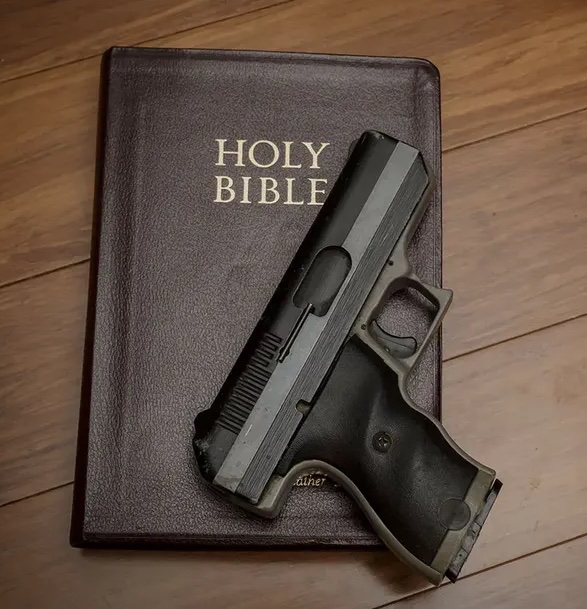
When it comes to issues of morality, many Christians hold steadfast in their convictions, supporting legislation that aligns with their religious beliefs. However, the topic of gun control has proved to be a divisive issue, with some Christians advocating for the Second Amendment as an inalienable right and others pushing for stricter gun laws. In this post, we will explore the intersection of Christianity and gun ownership, examining how certain biblical passages have been interpreted to support the Second Amendment and why many evangelicals are resistant to gun control. We will also compare this stance to other moral issues that Christians support legislation on, such as abortion and gay marriage. As we delve into this contentious topic, we invite readers to consider their own beliefs and the role of faith in shaping their views on gun control.
The Second Amendment and Christianity: Exploring the Interpretations
The Second Amendment, which guarantees the right to bear arms, has long been a hotly debated topic among Christians. Some view it as an inalienable right, grounded in the biblical principle of self-defense and protection of one’s family and property. Others, however, question the moral implications of a society where guns are easily accessible and argue for stricter gun laws to promote safety and reduce violence. This section will explore different interpretations of the Second Amendment and how Christians have historically viewed the right to bear arms. We will also examine how these interpretations have shifted over time and in response to recent events, such as mass shootings and gun violence.
The interpretation of the Second Amendment has been a subject of debate for many years, with differing viewpoints emerging from various Christian communities. Those who support the right to bear arms argue that it is an essential part of self-defense and the protection of one’s family and property. They point to passages in the Bible that speak to the importance of self-defense, such as Luke 22:36 where Jesus tells his disciples to sell their cloaks and buy swords.
However, others believe that the right to bear arms has been misinterpreted and that it comes at a high moral cost. Some Christians argue that the prevalence of guns leads to a culture of violence and that stricter gun laws would promote safety and reduce violence. They also point to the biblical commandment “Thou shalt not kill” (Exodus 20:13) and argue that gun violence goes against this commandment.
Throughout history, Christian views on the right to bear arms have shifted in response to changing social and political climates. In the early days of the United States, for example, many Christians saw gun ownership to protect their families from threats like wild animals and Native American raids. However, in the wake of mass shootings and increasing levels of gun violence, some Christians have begun to reexamine their stance on the issue and consider stricter gun laws to protect innocent lives.
Overall, the debate around the Second Amendment and Christianity is complex and multifaceted, with differing viewpoints emerging from different Christian communities. By exploring the different interpretations and examining how they have evolved over time, we can gain a deeper understanding of this important issue and its impact on society.
Over time, the interpretation of the Second Amendment has been shaped by changing social, political, and cultural circumstances. In the early days of the United States, for example, the right to bear arms was viewed as essential for personal safety and the defense of one’s property. At that time, the country was still in the process of establishing its independence, and there were few professional law enforcement agencies to protect citizens from harm.
As the country became more settled, however, the perception of the right to bear arms began to shift. Gun ownership was no longer seen solely as a means of self-defense, but also as a symbol of masculinity, freedom, and rugged individualism. During the Civil War, for example, both Union and Confederate soldiers saw themselves as patriots fighting for their God-given rights to bear arms and defend their way of life.
In the 20th century, as the United States became more urbanized and gun violence increased, some Christians began to question the moral implications of a society where guns were easily accessible. They argued that the Second Amendment had been misinterpreted and that stricter gun laws were necessary to promote safety and reduce violence.
In recent years, mass shootings and other acts of gun violence have sparked a renewed debate about the Second Amendment and its interpretation. Some Christians have become increasingly vocal about the need for stricter gun laws, while others continue to argue that the right to bear arms is an essential part of protecting one’s family and property.
Overall, the interpretation of the Second Amendment has evolved over time in response to changing social and political circumstances and continues to be a subject of debate among Christians and non-Christians alike.
The Morality of Gun Ownership: Christian Views on Self-Defense and Protection
Many Christians believe that owning a gun is a moral imperative, grounded in the biblical principle of self-defense and protection. They argue that it is a duty to protect one’s family, property, and community from harm and that owning a gun is a practical way to achieve this goal. Others, however, question the morality of gun ownership, arguing that it promotes violence and undermines the message of peace and nonviolence at the heart of Christianity. In this section, we will explore different Christian views on the morality of gun ownership, examining how these views have been shaped by cultural and historical factors. We will also consider how the biblical principle of love for one’s neighbor can inform our views on gun ownership and responsibility.
The debate among Christians regarding the morality of gun ownership is not a new one, and it has been shaped by various cultural and historical factors. One of the key factors has been the question of whether the use of lethal force is ever justified in self-defense. Some Christians hold to the belief that taking up arms in self-defense is a necessary and justifiable response to violence or threats of violence, while others argue that non-violent means are always preferable.
Historically, different Christian denominations and movements have held varying views on the issue of gun ownership. For example, some Anabaptist groups, such as the Mennonites and the Amish, have traditionally espoused pacifism and non-resistance, rejecting the use of any form of violence, including owning guns. On the other hand, some Christian groups, such as the Quakers, have emphasized the importance of non-violent conflict resolution but have also recognized the need for self-defense in certain circumstances.
One way in which the biblical principle of love for one’s neighbor can inform Christian views on gun ownership is by promoting responsible use and ownership of firearms. For example, the biblical mandate to love one’s neighbor as oneself can be interpreted as requiring us to take precautions to ensure that our guns are not used to harm others. This may include proper storage, responsible training, and support for legislation that promotes safety and prevents gun violence.
Furthermore, Christians who believe in the importance of protecting the vulnerable may be inclined to support reasonable restrictions on gun ownership, such as background checks and waiting periods, as a way to prevent guns from falling into the hands of those who might use them to harm others.
Overall, the morality of gun ownership remains a complex issue for Christians, and different interpretations and applications of biblical principles will continue to inform their views.
The Role of Government: Balancing Individual Rights and Community Safety
The role of government in regulating guns has been a contentious issue in the United States, with some advocating for stricter gun laws to promote public safety and reduce gun violence, and others arguing that such laws infringe on individual rights. In this section, we will explore different Christian views on the role of government in regulating guns, examining how these views are shaped by biblical principles of justice, mercy, and love. We will also consider how Christians can balance individual rights with the common good and how we can work together to promote safety and protect life.
The debate over the role of government in regulating guns has been ongoing in the United States for decades. Some Christians argue that the government has a duty to promote public safety and reduce gun violence through stricter gun laws. They cite biblical principles of justice, mercy, and love for neighbor as reasons to support gun control measures. These Christians often point to verses such as Micah 6:8, which instructs us to “do justice, love mercy, and walk humbly with our God,” as a call to action to promote the common good.
Other Christians, however, argue that government regulation of guns infringes on individual rights and freedoms. They often cite the Second Amendment as evidence of the constitutional right to bear arms, and believe that owning a gun is a matter of personal responsibility and individual choice. These Christians often view gun ownership as a way to protect themselves and their families, and as a way to exercise their God-given right to self-defense.
However, many Christians recognize that there is a need to balance individual rights with the common good. They believe that it is possible to support the Second Amendment while also advocating for common-sense gun control measures that promote public safety. This can include measures such as background checks, waiting periods, and restrictions on certain types of firearms.
It can be argued that the positions on gun control and issues such as abortion and gay marriage are not necessarily inconsistent, but rather reflect different beliefs about the role of government in regulating different areas of life. Some evangelicals believe that the government should not have a significant role in regulating guns, as they view the Second Amendment as a fundamental right enshrined in the Constitution. In contrast, they may support government intervention in areas such as abortion and marriage, as they believe these issues are matters of morality and human dignity that require protection.
Others, however, may argue that there is a double standard at play, as many of the same individuals who oppose gun control measures also support restrictions on issues such as abortion and gay marriage. They may argue that this inconsistency reflects a narrow and inconsistent interpretation of individual rights and freedoms, and that a more consistent approach would be to support government intervention in all areas where individual rights and community safety are at stake.
Ultimately, the debate over gun control and other issues such as abortion and gay marriage is complex and multifaceted, reflecting a range of competing beliefs about individual rights, morality, and the role of government in society. While there may be no easy answers, it is important for Christians to engage in thoughtful and respectful dialogue about these issues and seek to promote policies that reflect a commitment to justice, compassion, and human dignity.
Ultimately, Christians can work together to promote safety and protect life, while also respecting individual rights and freedoms. By engaging in dialogue and seeking common ground, Christians can find ways to balance individual and community needs, and promote the flourishing of all members of society.
A Culture of Fear: How Christianity and Gun Ownership Intersect
The intersection of Christianity and gun ownership has given rise to a culture of fear, where individuals feel the need to arm themselves in response to perceived threats. In this section, we will examine how this culture of fear has been perpetuated by political and media narratives, and how it intersects with Christian beliefs about safety and protection. We will also consider how Christians can work to dismantle this culture of fear and promote peace and nonviolence.
The culture of fear is not unique to the intersection of Christianity and gun ownership, but it is certainly a prevalent aspect of the debate. Fear can drive individuals to take extreme measures to protect themselves and their families, including the acquisition and use of firearms. However, the Bible consistently teaches us to not fear, but to trust in God’s protection and provision.
In the Old Testament, there are numerous examples of God calling His people to trust in Him and not be afraid, such as in Deuteronomy 31:6 which states, “Be strong and courageous. Do not be afraid or terrified because of them, for the Lord your God goes with you; he will never leave you nor forsake you.” This message is reiterated in the New Testament in 2 Timothy 1:7, which says, “For God has not given us a spirit of fear, but of power and of love and of a sound mind.”
As Christians, we are called to trust in God’s protection and provision, rather than rely on weapons for our safety. While we can certainly take measures to protect ourselves and our families, such as locking our doors and being aware of our surroundings, we should not let fear drive us to put our faith in guns instead of God. By promoting a culture of trust and reliance on God, we can work to dismantle the culture of fear that has permeated our society.
The media and politicians in America play a significant role in perpetuating a culture of fear and anxiety around gun ownership. News outlets often sensationalize stories about gun violence, leading to heightened anxiety and a belief that one is constantly at risk of harm. Politicians often use this fear to their advantage, appealing to voters’ concerns about their safety and promoting a pro-gun agenda to secure their support.
The sensationalized news coverage of mass shootings and other incidents of gun violence can also create a sense of desensitization to these tragedies, leading to a numbing effect on the public’s perception of violence. This desensitization can, in turn, lead to a normalization of gun violence and acceptance of it as a regular part of life in America.
Moreover, politicians often use fear tactics to push their political agenda, particularly in the context of gun control. They may argue that without guns, citizens will be unable to protect themselves from criminals or a tyrannical government, creating a sense of fear and paranoia that can be used to justify the need for less restrictive gun laws. This rhetoric often appeals to those who feel threatened by societal or cultural changes and those who believe that they need guns to protect themselves and their way of life.
However, Christians are often reminded in scripture to “not fear” and to place their trust in God rather than material possessions or personal strength. In fact, the phrase “do not fear” appears over 300 times in the Bible, emphasizing the importance of trusting in God’s protection rather than relying solely on human efforts. As Christians, it is important to remember this message and work towards promoting peace and nonviolence in our communities, rather than perpetuating a culture of fear and anxiety.
Comparing Stances: Abortion, Gay Marriage, and Gun Control in the Christian Context
As we explore the Christian stance on gun control, it’s important to compare it to other moral issues that Christians support legislation on, such as abortion and gay marriage. In this section, we will examine how Christians have historically approached these issues, and how they compare to the current debate on gun control. We will also consider how Christians can engage in these debates in a way that is faithful to their beliefs and promotes justice, mercy, and love.
The issue of abortion has been a prominent topic of debate among Christians for decades. Many Christians believe that life begins at conception, and therefore view abortion as a moral wrong and a violation of the sanctity of human life. As a result, many Christians have supported legislation that seeks to limit or even ban abortion. On the other hand, there are Christians who support a woman’s right to choose and believe that reproductive rights are a matter of personal freedom and autonomy.
Similarly, the issue of gay marriage has also been a contentious topic within the Christian community. Some Christians view homosexuality as a sin and believe that marriage should only be between a man and a woman, while others advocate for equal rights for the LGBTQ+ community and view love and commitment as central to the institution of marriage, regardless of gender.
In comparison to the debates surrounding abortion and gay marriage, the issue of gun control has a unique place in the Christian context. While some Christians view the right to bear arms as an essential part of self-defense and protection, others believe that gun ownership perpetuates a culture of fear and violence that is contrary to Christian values of peace and nonviolence.
Regardless of where Christians stand on these issues, it’s important to approach these debates with an understanding of the complexity of the issues and with a commitment to promoting justice, mercy, and love. Christians should strive to engage in dialogue that is respectful and seeks to understand differing perspectives, while remaining grounded in their own beliefs and values.
As Christians navigate the complex issue of gun control, it’s important to remember that faith can inform but not dictate political beliefs. While many evangelicals may see the Second Amendment as a cornerstone of their beliefs, it’s worth examining how this interpretation lines up with other moral issues that Christians support legislation on. As we continue to debate this issue, we must also grapple with the reality of gun violence in our communities and consider how our faith can be a force for positive change in promoting safety and protecting life. In the words of Micah 6:8, “And what does the Lord require of you? To act justly and to love mercy and to walk humbly with your God.”